
If you’re planning a kitchen update, one of the first big decisions is whether to go with stained or painted cabinets. It sounds simple until you start comparing samples — wood grain, color depth, hardware finishes, cleaning habits, lighting, resale value, and whether you want warmth or a cleaner, more modern edge.
There’s no universal winner here. The better choice depends on your cabinets, your budget, the look you want, and how you actually live in your kitchen. Some homeowners love the natural character of stained wood; others want the crisp, tailored look of paint and never look back.
In Ventura County, the decision gets even more personal. Bright coastal light, indoor-outdoor living, and a mix of Spanish, traditional, transitional, and contemporary homes all shape what feels right. A finish that looks perfect in a dark showroom can behave very differently in a sun-filled kitchen in Thousand Oaks, Camarillo, Simi Valley, or Ventura. Here’s how the two compare — and, just as important, what’s realistically achievable with the cabinets you already have.
The Core Difference: Stain Enhances, Paint Covers
At the most basic level, stain enhances the wood while paint covers it. That one distinction drives almost everything else — appearance, upkeep, and how the cabinets age.
Stained cabinets let the grain show through. The stain sinks into the surface and highlights the texture and character of the wood underneath, which is why oak, maple, and hickory each produce a distinct look. Painted cabinets do the opposite: paint creates a smooth, uniform color across doors, drawer fronts, and face frames, for a more tailored, architectural result. So the real question is what you want the eye to notice — the material itself, or the color and shape of the cabinetry.
Why Stained Cabinets Still Have Strong Appeal
Stained cabinets have never really gone out of style. There’s something grounded about real wood in a kitchen — it brings a warmth that painted surfaces sometimes struggle to match. A medium walnut, a soft natural oak, or a deeper brown stain can make a room feel welcoming, and in open floor plans, stained cabinets connect well with nearby wood flooring, beams, or trim.
Stain works best when the cabinet construction is solid and the wood has real visual interest. Oak has a pronounced grain and lots of texture; maple is smoother and more subtle; hickory brings dramatic variation. Stained finishes are also practical: they tend to hide scratches, minor dings, and everyday wear better than paint, which matters in a busy kitchen with kids or pets.
Where Professional Painted Cabinets Shine
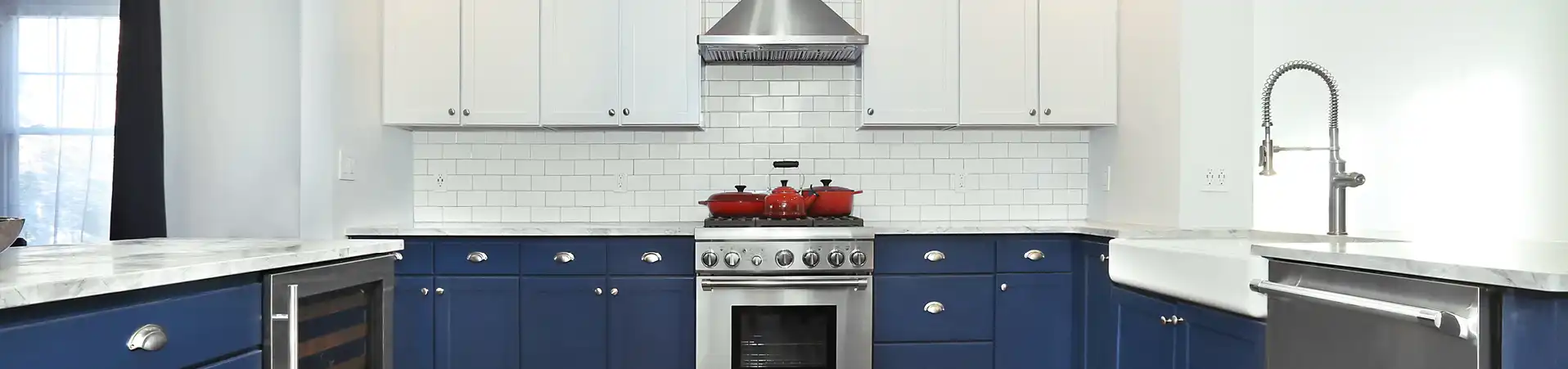
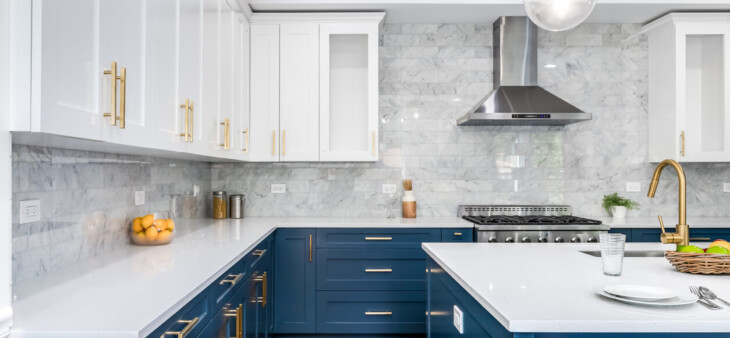
Painted cabinets remain popular for good reason. They can completely transform an older kitchen, brighten a dark room, and deliver a fresh, updated look without the cost of a full remodel.
Their biggest advantage is control. With stain, the final color is always influenced by the wood underneath; with paint, you can dial in almost any color to match wall tones, backsplash tile, flooring, or an island contrast. Paint is also the better option when the existing material isn’t especially attractive — components made from Medium-Density Fiberboard (MDF), or wood with uneven grain, discoloration, or a dated orange tone. And for homeowners drawn to sleek lines, flat-panel doors and a flawless painted finish push a kitchen toward a modern or contemporary style.
There’s an important point about durability here, because it’s widely misunderstood: a professionally painted cabinet finish is not the same as rolling wall paint onto your doors. The chipping and constant touch-ups people associate with painted cabinets almost always come from DIY jobs or basic wall paint that was never designed for cabinetry. A professional finish is a different process entirely — thorough cleaning and prep, proper priming, cabinet-grade coatings, and a controlled curing process. Done that way, painted cabinets are highly durable and stand up to daily kitchen use. The finish matters as much as the color.
Matching the Finish to Your Home’s Style
Architecture and personal style matter as much as durability. Stained cabinets feel at home in traditional, rustic, organic, and craftsman kitchens, and anywhere natural materials lead the design — white-oak floors, brass hardware, handmade tile. Painted cabinets are often tied to modern kitchens, but they also suit farmhouse, transitional, and classic spaces; white paint endures because it reflects light and pairs with nearly any hardware. Many homeowners land on a mix — stained wood on an island for warmth, painted perimeter cabinets for brightness — which, in the right kitchen, looks deliberate and custom rather than trendy.
Cost: Which Option Is More Budget-Friendly?
Cost depends on more than the finish. The condition of your existing cabinets, the materials, the amount of prep, and whether you’re refinishing, repainting, or replacing doors all affect the final number.
Stain can be more forgiving during refinishing if the underlying wood is in good shape. But if the existing finish is uneven, previously coated, or needs aggressive sanding to remove damage, the work becomes more labor-intensive. Paint, meanwhile, usually requires extensive prep to achieve a flawless result — cleaning, repair, sanding, priming, and careful coating. Open-grain woods like oak can telegraph through paint unless extra steps are taken. In other words, sometimes stain is less work and sometimes paint is; the deciding factor is often whether your existing doors are the right material for the finish you want. If they aren’t, replacing the doors while keeping the boxes can be a smart middle ground.
Maintenance, Wear, and Everyday Life
This is where many homeowners change their minds — the prettier sample isn’t always the better long-term choice, and a lot depends on how the finish was applied.
A professionally finished painted cabinet holds up well. Because it’s a cabinet-grade, cured coating rather than surface-level wall paint, it resists the chipping and wear people worry about. Some maintenance realities still apply: on white or very light colors, any mark that does happen shows up more than it would on a darker or stained finish, so occasional cleaning and the rare touch-up keep things looking sharp.
Stained cabinets are forgiving in a different way. Because the color works with the wood rather than sitting on top of it, minor scratches and wear often blend in. Color-matching stain on damaged wood still takes skill, but visible repairs tend to be less frequent. Either way, the quality of the finish is what determines long-term durability. High-traffic cabinets need protection from moisture, oils, and repeated cleaning, and a proper prep-and-cure process — professional either way — is what delivers it.
What You Can Realistically Change (Especially With Stain)
It’s worth setting expectations here, because not every cabinet can become any color you want. That’s especially true with stain.
Stain works with the wood, so your starting point matters. The wood species, the existing finish, the condition of the cabinets, and any repairs all affect what’s achievable — and so does the direction you want to go. Going darker is generally straightforward; going dramatically lighter is much harder, since the existing color and finish usually have to be stripped or sanded back first, and some woods simply won’t take a lighter tone evenly. Real wood is also essential for a true stained look: stain needs wood fibers to penetrate, so MDF and laminate components can’t be stained the way solid wood can.
Paint is more flexible on this front — it can unify mixed materials and cover grain or discoloration — which is one reason painted or replaced doors are sometimes the better route when the existing wood won’t deliver the stained result you’re picturing. The most reliable way to know what’s possible is an in-person evaluation of your actual cabinets.
How Lighting Changes the Decision
Kitchen lighting can completely shift how stain or paint reads, and Ventura County homes often get strong natural light that changes through the day. Painted cabinets in white, cream, or soft gray reflect more light and can make a smaller or darker kitchen feel more open. Stained cabinets absorb and shape light differently — richer and more dimensional when the grain catches sun, though a dark stain can feel heavy in a compact room that’s already short on light. This is why samples matter: always evaluate a color in your actual kitchen, at different times of day, before committing.
Questions to Ask Before You Decide
Before choosing, think about how your kitchen actually functions. Do you cook every day? Do you have kids opening doors with sticky hands? Are you staying for years, or updating for a near-term sale? A few practical questions help:
- Do you want to showcase real wood, or create a clean color statement?
- Are your existing cabinets made from materials suited to stain or paint?
- Are you after a modern, transitional, or classic look?
- Will your hardware be bold and decorative, or simple and understated?
- How much everyday wear are you likely to put the kitchen through?
Final Thoughts on Stained vs. Painted Cabinets
When it comes to stained versus painted cabinets, the right answer is the one that fits your kitchen in real life, not just on a mood board. Stained cabinets offer warmth, texture, and character. Painted cabinets offer flexibility, brightness, and a uniform, tailored look. Both can be beautiful and durable when they’re done professionally.
The key is choosing with intention — matching the finish to your cabinet condition, the room’s light, your hardware, your lifestyle, and how much maintenance you want to take on. And if your cabinet boxes are solid but the doors are dragging the kitchen down, replacing the doors and drawer fronts while updating the finish can transform the space without the cost and disruption of a full remodel.
If you’re updating kitchen cabinets in Ventura County, a professional evaluation is the best way to determine whether your cabinets are better suited to stain, paint, refinishing, or door replacement — and what’s realistically achievable with them. Ready to take the next step? Call your local N-Hance of Ventura County today at (805) 491-2930 to explore your options and request a design consultation.