
Cabinet resurfacing has been giving kitchens a second life for decades, and it’s never been more popular or more capable than it is today. What started as a budget-friendly workaround in the 1970s has evolved into a sophisticated process that delivers designer-level results without the cost or disruption of a full remodel. For Wilmington homeowners with solid cabinets and an outdated style, resurfacing remains one of the smartest kitchen upgrades available.
How Cabinet Resurfacing Got Its Start
Resurfacing gained traction in the 1970s and ‘80s as custom cabinetry prices climbed and homeowners looked for ways to refresh their kitchens without starting over. The concept was simple: keep the cabinet boxes, replace the doors and drawer fronts, and update the finish. It worked then, and it still works now, but today’s materials, coatings, and technology have raised the bar considerably. N-Hance of Wilmington brings instant-cure Lightspeed® Nano UV technology, commercial-grade coatings, and a wide selection of custom door styles to a process that’s been refined over 50 years.
Decade by Decade: How Wilmington Kitchens Have Changed
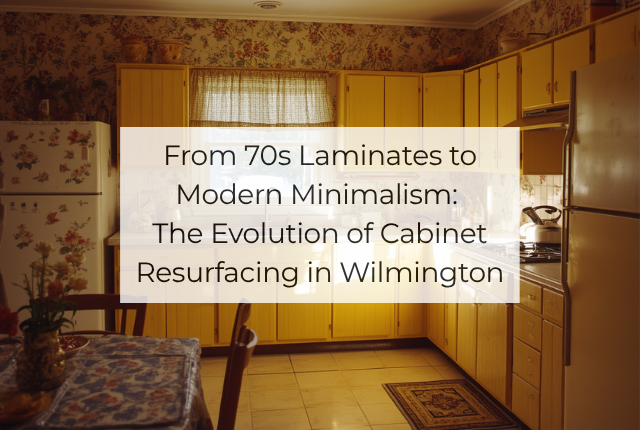
1970s – Earth tones and heavy profiles. Avocado green, harvest gold, and dark wood paneling defined the era. Cabinets were built to last, but the aesthetic is unmistakably dated by today’s standards. The good news: those sturdy boxes are excellent candidates for resurfacing. New Shaker-style doors and a coat of warm white or soft sage can completely transform a ‘70s kitchen without touching the structure.
1980s – Golden oak and brass hardware. Solid oak cabinets were everywhere in ‘80s Wilmington homes, and many of them are still standing, well-built and structurally sound. New doors, updated paint or stain, and modern matte hardware can bring these kitchens fully into the present without discarding quality hardwood that outperforms what you’d find in today’s budget replacements.
1990s – Raised panels and cherry tones. Large kitchens with raised-panel doors and warm cherry stains were the hallmark of ‘90s construction. These cabinets are usually in excellent structural shape and ideal for resurfacing. Swapping to cleaner door profiles and lighter colors – soft whites, warm grays – brings a transitional look that feels timeless rather than trend-driven.
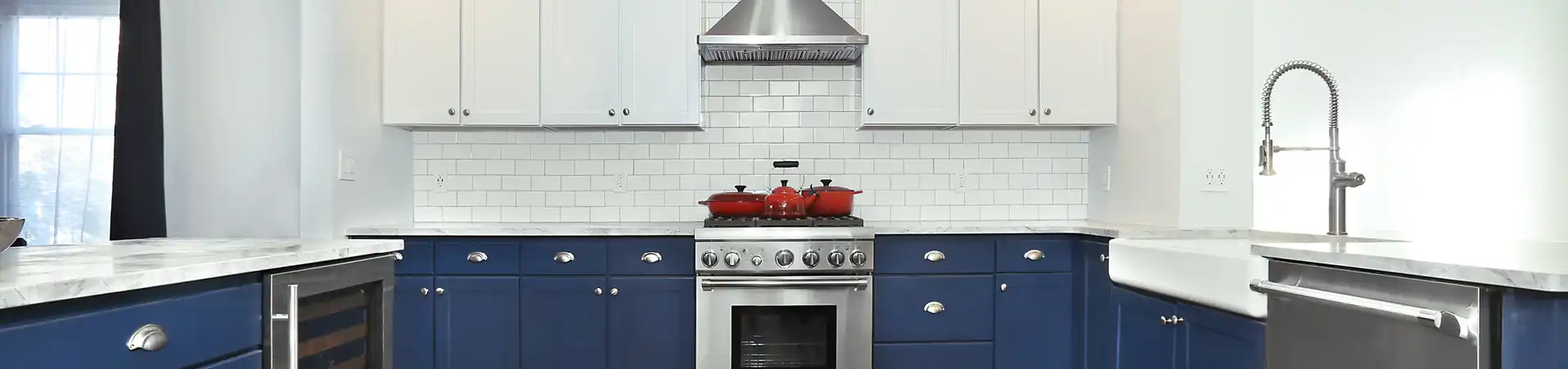
2000s – Espresso and stainless steel. Dark espresso finishes and sleek, modern aesthetics defined the early 2000s. Today, many Wilmington homeowners want something brighter and more open. Resurfacing makes it easy to shift from dark and heavy to light and airy, or to introduce a bold island color like navy or forest green paired with lighter upper cabinets.
What’s Trending Now
Today’s most popular cabinet styles share a few common themes: simplicity, brightness, and durability. Shaker doors remain the most requested profile, paired with soft whites, warm greens, and two-tone combinations. Matte black and brushed nickel hardware have largely replaced the polished brass and chrome of earlier decades. Open shelving, crown molding, and pull-out storage upgrades round out a modern look that’s both functional and clean.
N-Hance of Wilmington offers an extensive selection of door styles, colors, and finishes, with expert guidance to help you find the right combination for your home and neighborhood.
Is Your Wilmington Kitchen a Good Candidate?
The best candidates for resurfacing are cabinets with solid wood or quality plywood boxes, sturdy frames and shelving, no significant water damage or warping, and a layout that already works well for the household. If your cabinets were built between the 1970s and early 2000s, there’s a good chance they’re better constructed than what you’d buy new at a comparable price point today, making resurfacing a smart way to preserve that quality while updating the style.
Ready to give your Wilmington kitchen a fresh start? Contact N-Hance of Wilmington at (910) 541-1633 for a FREE consultation and find out how cabinet resurfacing can transform your space without replacing what’s already working.