
Walk into any kitchen, and your eyes immediately settle on two things: the cabinets and the floor. Together, they cover more visual real estate than anything else in the room, which means getting them to work together is one of the most important design decisions you will make.
The goal is not for them to match. The goal is for them to feel like they belong to the same story.
At N-Hance, cabinets are where we live. We work with the cabinets you already have to create the kitchen you have been picturing, through cabinet painting in Denver that transforms the space without tearing it apart. Along the way, we help homeowners think through how their cabinet color choices will sit alongside the flooring, whether that flooring is brand new or has been there for years.
How to Actually Think About Cabinet and Floor Colors
Let go of the idea that your cabinets and floors need to share a color family. Some separation between the two is usually what makes a kitchen feel put together rather than blended into one big beige blur.
That said, separation does not mean you need a jarring contrast. Sometimes the most effective pairings are subtle, a tone or two apart, just enough to give the eye something to register without feeling like two unrelated rooms collided.
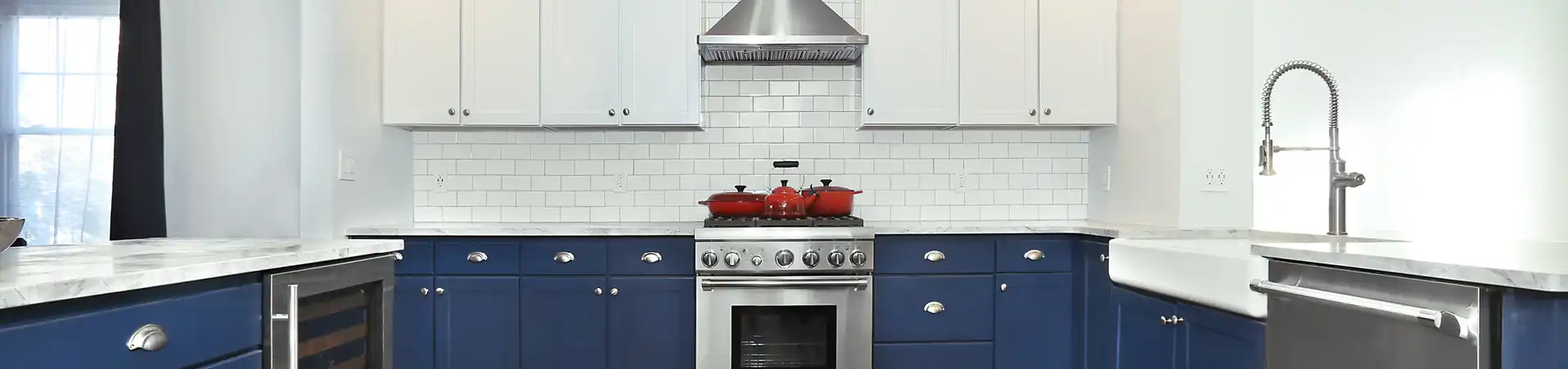
Here is a simple rule worth keeping in mind: if you want to make a statement with color, your cabinets are the place to do it. Flooring tends to age better and feel more timeless when it stays in neutral territory, since it has to coexist with whatever furniture, rugs, or design choices come next.
And if indecision has you stuck, soft white cabinets remain a go-to for a reason. They are the chameleon of kitchen design, sliding comfortably next to almost any floor color, tone, or temperature you put them next to.
The idea that everything needs to be the same material or temperature is simply untrue. A warm wood floor does not require warm-toned cabinets. Sometimes the unexpected pairing is the one that makes a kitchen cabinet makeover feel designed rather than default.
Where This Decision Tends to Go Wrong
Most of the regret we hear about after a kitchen update does not come from a bad color choice on its own. It comes from how that color choice was made.
The biggest culprit is choosing cabinet and floor colors in separate moments, on separate days, without ever placing them side by side in the room where they will actually live. A sample that looks perfect on a kitchen island under a paint store’s lighting can look completely different against your real flooring under your real windows. Always bring the two together before locking anything in.
The second issue is playing it too safe by going nearly identical. When cabinets and floors sit within a shade of each other, the kitchen can lose its sense of depth entirely, reading as one continuous surface rather than a layered space. A bit of contrast is what gives a kitchen its dimension.
Countertops also tend to get left out of this conversation, even though they sit physically and visually between your cabinets and your floor. Treat your cabinets, countertops, and flooring as three pieces of the same puzzle rather than three separate decisions made on three separate days.
And do not be afraid to cross the warm and cool divide. A cooler-toned floor with warmer cabinets, or the other way around, can create a kitchen that feels intentional and layered rather than monochromatic. The mistake is rarely the combination itself. It is skipping the step of seeing it in person first.
Do Not Forget the Hardware
After cabinet color and flooring are settled, there is one more piece that quietly makes or breaks the final look: hardware. Pulls, knobs, and hinges are small, but they are also the parts of your cabinets that get touched every single day, and worn or mismatched hardware has a way of making an otherwise refreshed kitchen feel unfinished.
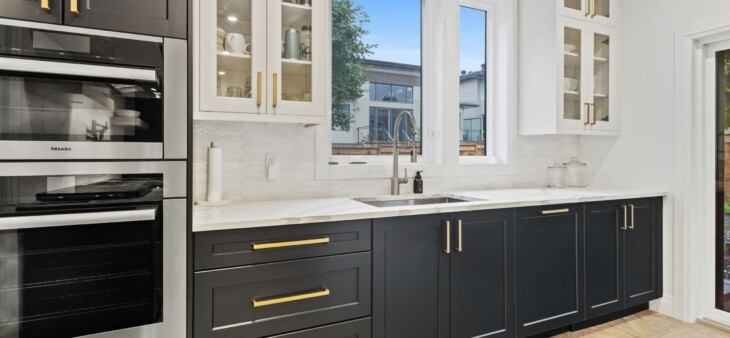
Darker cabinet tones, think navy, charcoal, or espresso, tend to come alive next to brushed brass, matte black, or aged bronze hardware. The contrast gives the cabinets a finished, intentional look. Lighter cabinets in soft white or cream give you more room to play. Brushed nickel and chrome lean modern and clean, while brass or bronze can warm things up without taking over.
The best part is that hardware does not need to be its own project. As part of our cabinet modifications work, we can help you choose and install new hardware right alongside your refinishing or painting project, so the whole kitchen comes together in one pass.
Let’s Bring Your Kitchen Together
Coordinating cabinet and flooring colors does not have to mean staring at paint chips for weeks. Our team specializes in helping homeowners see the full picture before committing to anything, working with the cabinets you already have to bring your kitchen vision to life.
It starts with a free estimate. We will walk through your space, your flooring, and the look you are going for, and help you find a cabinet color that feels like it was always meant to be there.
Do my cabinets and flooring need to be the same color family to look cohesive?
Not at all. In fact, some contrast between your cabinets and flooring is what creates a cohesive, intentional-looking kitchen. Matching everything too closely can actually make a space feel flat and washed out. The goal is coordination, not duplication.
Is it better to choose bold colors for cabinets or flooring?
Generally, cabinets are a better place for a bold or saturated color. Flooring tends to work best in more neutral tones since it covers a larger surface area and needs to work with everything else in the room over time, including furniture and decor.
What hardware finishes pair well with darker cabinet colors?
Brushed brass, matte black, and aged bronze all tend to stand out nicely against deeper cabinet tones like navy, charcoal, or espresso. The contrast between the hardware and the cabinet color tends to make both elements feel more deliberate.
What if I choose a cabinet color now and want to change it again down the road?
Because refinishing is faster and more affordable than a full remodel, choosing a different cabinet color in the future is much more approachable than it would be if you had replaced your cabinets outright. This makes it easier to feel confident in a bold choice now, knowing it is not a permanent commitment.