
Cabinet resurfacing, also known as cabinet refacing, has become one of the most practical and popular ways for homeowners to refresh their kitchens without the cost and disruption of a full remodel. Yet, while the term might sound new, the idea of giving cabinets a cosmetic facelift has been around for decades. Here’s a look at how cabinet resurfacing has evolved over the years and why it’s still a smart, stylish choice for today’s homeowners.
The Origins of Cabinet Resurfacing: When Did It Begin?
It’s hard to pinpoint exactly when cabinet refacing emerged, but it likely happened during the 1970s and 80s as a budget-friendly alternative to full cabinet replacements. As cabinet manufacturing evolved and prices for new cabinetry rose, homeowners began looking for ways to refresh their kitchens without huge, messy renovations and the costs that come with them.
Since then, the process of cabinet resurfacing has changed dramatically today thanks to specialized coatings, instant curing technology, and custom-built doors. All of this combines to make cabinet resurfacing a fast, durable, and visually appealing upgrade for kitchens, bathrooms, home offices, and other spaces throughout the home.
Cabinet Style Evolution: A Decade-by-Decade Look
Trends in kitchen styles have changed dramatically over the decades. Whatever era your kitchen cabinets are from, resurfacing them can deliver a major transformation, whether you have:
1970s Laminates, Wood Paneling, and Earth Tones
The 1970s were bold, to say the least. Kitchens from this era generally featured dark wood tones like walnut or oak, laminate surfaces, wood paneling, and heavy, ornate door profiles. Avocado green, harvest gold, and burnt orange dominated the color palettes.
While these cabinets were sturdy and built to last, the dark finishes and heavy designs feel dated today. If your cabinets are from this era, resurfacing allows you to maintain their structural integrity while updating them with light, neutral tones and modern door styles.
1980s Oak Overload and Golden Finishes
The 1980s ushered in an era of golden oak. Cabinet doors were flat or had subtle arches, and brass hardware became increasingly popular. Kitchens were functional but began to lean toward brighter spaces with lighter woods and cleaner lines.
Oak cabinets from this era are often excellent candidates for cabinet resurfacing, especially since they were typically made from solid hardwood. With a fresh coat of paint or stain on cabinet boxes and new doors, they can be transformed into something sleek and elegant.
1990s Raised Panels and Cherry Tones
Cabinet design in the 1990s shifted toward raised panel doors, warm cherry stains, and more decorative hardware. Kitchens were getting bigger with larger layouts and more storage.
These well-built cabinets are still found in many homes today and are often structurally sound. Resurfacing them is the perfect solution for bringing them into the 21st century by replacing ornate doors with clean shaker styles and swapping out dark cherry finishes for a lighter paint tone.
2000s Espresso Finishes and Open Floor Plans
In the early 2000s, espresso finishes grew in popularity, creating a more dramatic and modern feel. Paired with stainless steel appliances and granite countertops, this was the signature look of the time.
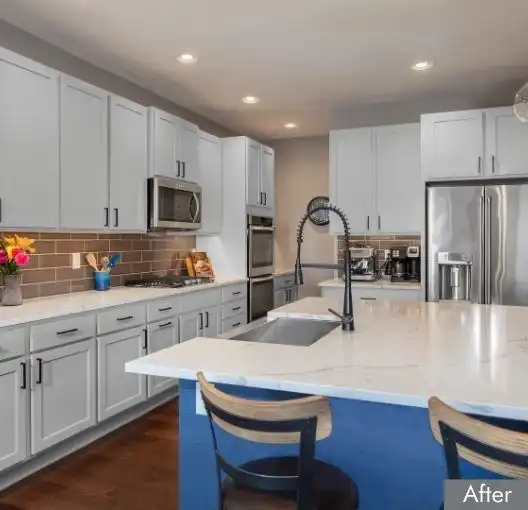
Now, many homeowners find the dark tones overpowering or outdated. The good news? Cabinet resurfacing can take these deep finishes and revamp them with soft grays, creamy whites, or even two-tone combinations for a lighter, airier feel.
What’s on Trend Today For Cabinet Resurfacing? Minimalist, Functional, and Bright
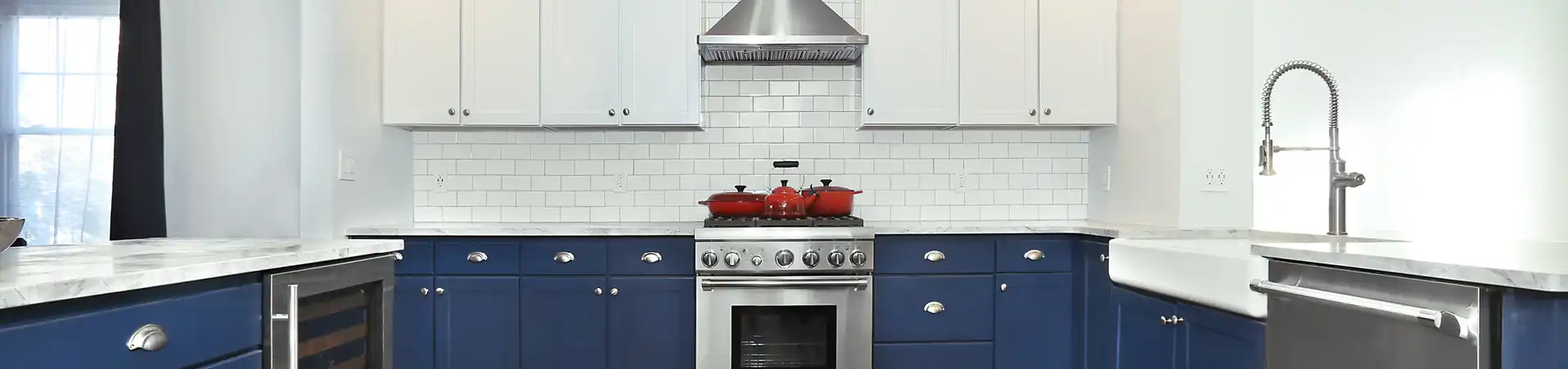
Today’s cabinet trends focus on simplicity, durability, and timeless style. Shaker doors are leading the way, often painted in whites, off-whites, grays, navy blues, or even muted greens. Matte black and brushed gold hardware offer clean contrast, and it’s become more common to mix upper cabinets with open shelving for an updated look.
Other trends for cabinet resurfacing include:
- Kitchen islands that make a bold color statement with other cabinets painted a more neutral color
- Wood-tone cabinets to add warmth and character to kitchens
- Incorporating storage solutions, such as pull-out shelving, beverage centers, and and drawer dividers, inside cabinets
- Adding crown molding to upper cabinets to extend them to the ceiling
Are Your Cabinets Good Candidates for Resurfacing?
The beauty of cabinet resurfacing is that it works with what you already have as long as your cabinets are structurally sound. Not every cabinet is a good fit for this process, so make sure your cabinets feature the following:
- Solid wood or high-quality plywood cabinet boxes
- Sturdy frames and shelving
- Little to no water damage or warping
- A layout you’re happy with and don’t need to change
Many older cabinets from the 1970s through the early 2000s are higher quality than some of today’s mass-produced versions. In the past, manufacturers used real hardwood materials and robust construction techniques that aren’t always found in modern, budget-friendly manufacturing processes.
For you, that means your older cabinetry is still valuable and just needs a facelift. With cabinet resurfacing, you can preserve the strength and craftsmanship of your original cabinets while enjoying the benefits of a completely updated look.
Give Your Cabinets a Second Life with Resurfacing
No matter what decade your cabinets were built in, N-Hance® can help you transform them with beautiful, lasting results. Whether you’re ready to say goodbye to dated laminates, golden oak, cherry finishes, or espresso tones, cabinet resurfacing offers a simple, straightforward solution to refresh your space without tearing everything out.
Contact your local N-Hance team at (855) 642-6230 for a FREE consultation and find out how cabinet resurfacing can bring your kitchen into the modern age.